



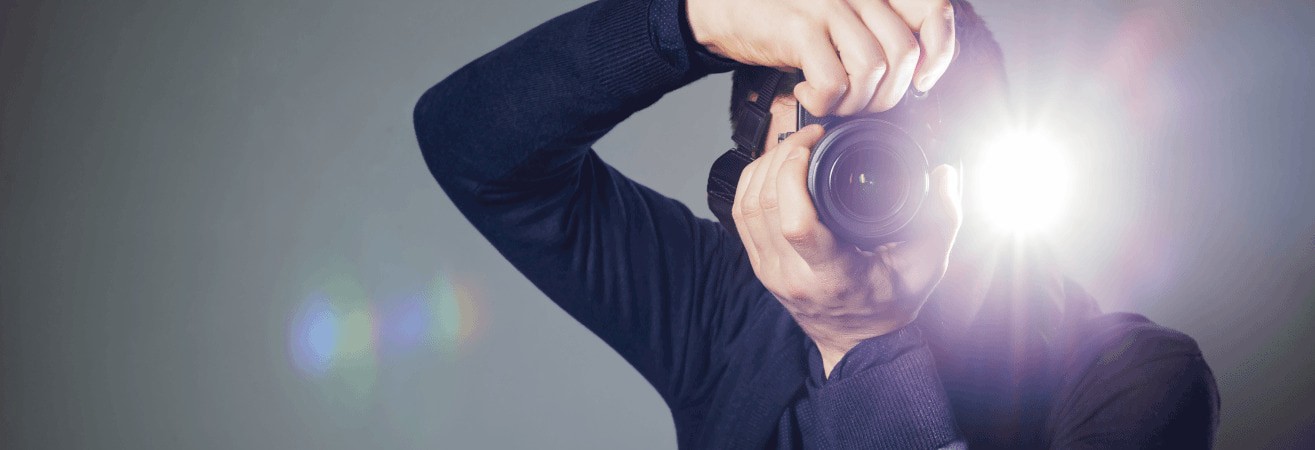
Camera flash : When to use it and when not to use it ?
The flash is one of the first settings you learn about in photography. Often activated by default, it can completely transform the mood of an image. If it is too strong, it flattens the image. If used incorrectly, it dazzles the subject or creates unflattering shadows. When used correctly, however, it can be a valuable ally, especially when there is not enough light.
Should you always use it? In what situations should you turn it off? And above all, how do you set the flash on your camera to achieve natural, balanced lighting? This article provides step-by-step guidance to help you better understand the role of the flash, learn how to use it effectively, and avoid common mistakes.
Everything you need to know about camera flash
Before getting into settings and best practices, it may be helpful to understand what a flash really is. What is it actually used for? How does it work? And should you be wary of using it when lighting faces up close? This first section covers the essential basics.
What is the purpose of a camera flash?
A flash is primarily a source of additional light. It is designed to compensate for a lack of light in certain situations, particularly indoors or when the subject is poorly lit. It also allows you to freeze fast movement with a brief but intense flash, which is useful when capturing a scene on the fly, for example.
Another important use of the flash is to rebalance the exposure, especially outdoors when a subject is backlit. The face remains clearly visible, even if the background is very bright.
There are many uses for the flash. It can be used for indoor portraits, family gatherings, and group photos at the end of the day. Or even for shots in a dark environment such as a museum or theatre.
How does a camera flash work?
The principle of the flash is quite simple. It is a flash of artificial light, triggered at the exact moment the camera shutter opens. This illuminates the scene during the shot, without any delay.
There are several types of flash. The most common is the built-in flash, often located above the lens on compact or SLR cameras. It is convenient, but its range is limited. For more advanced uses, you can use an external flash, which is more powerful and adjustable, often mounted on a hot shoe designed for this purpose.
Distance plays an important role. A built-in flash effectively illuminates up to two or three metres. Beyond that, its effect diminishes. Therefore, you should not rely on it to illuminate a distant scene.
The power of the flash can also vary depending on the model. Some allow manual adjustment, while others automatically adapt to ambient light thanks to built-in sensors.
Does the flash damage the eyes?
You've probably asked yourself this question before, especially when photographing children or animals. Don't worry, under normal use, the flash poses no danger to the eyes. Its flash is very brief and obviously complies with all strict safety standards.
However, there are a few precautions to be aware of. Avoid firing the flash too close to the face, especially for babies or animals that are sensitive to light. Try to maintain a safe distance of at least one metre. This is recommended to ensure soft, pleasant lighting.
Most cameras also have a red-eye reduction mode. This mode triggers a small light before the main flash. This allows the pupil to contract and avoids the red-eye effect often seen in night-time photos.
Should you always use the camera's flash?
When you're new to photography, you tend to leave the flash on by default. However, it's not necessary in all situations. Sometimes it can even affect the quality of the image. So how do you know when to use it and when to leave it off? Here are a few guidelines to help you decide when taking a photo.
When should you use the flash on a camera?
The flash is useful when there is not enough natural light to properly illuminate the subject. This is typically the case for indoor photos, in a dimly lit room or in the evening. It is also recommended when taking a backlit portrait, so that the face is not too dark compared to the background.
Another example is a moving subject in a dark environment. The flash freezes the movement and reduces blur, which is useful at parties or indoor events. It can also help in museums or enclosed spaces if the ambient light is not sufficient to expose the scene properly.
In summary, the flash is mainly used in situations where the light is too low or poorly directed to achieve a balanced result.
Does flash make photos sharper?
In some situations, yes. Flash freezes motion by illuminating the subject at the precise moment the image is captured. This reduces blur caused by small movements, slight camera shake, or a moving subject.
But be careful, flash is not a miracle solution. It does not correct a photo focus problem. If the focus area is set incorrectly, or if the camera is too close to the subject, the photo may still be blurry.
To improve sharpness, it is best to combine the flash with good framing, a precise focus point and the correct distance between the camera and the subject.
Can you take photos at night without a flash?
It is entirely possible. The flash is a help, but it is not essential in all night scenes. There are other technical solutions for taking a successful night photo.
For example, you can use a camera tripod. This stabilises the image during a long exposure, without blurring. You can also increase the ISO sensitivity to capture more ambient light, or choose a well-lit location.
When taking indoor photos, it's a good idea to set up lighting for indoor photography. A soft lamp or natural light near a window is often enough to avoid using the flash while maintaining a beautiful atmosphere.
The flash is still useful when the scene is really too dark, but it's not always necessary. It's best to use it judiciously, depending on the desired effect.
Using the flash properly: the right settings on your camera
Mastering the use of flash isn't just about knowing when to activate it. It's also about understanding how to adjust it according to the scene. Most cameras today offer several flash modes. But you still need to know how to identify them and choose the one that best suits the situation. Here are some practical tips to guide you in everyday use.
How do you use a camera flash?
On a compact or hybrid camera, the flash is often represented by a lightning bolt icon. Depending on the model, it can be found in the main menu or on a dedicated button. Clicking on it usually gives you access to several operating modes.
Here are the main ones:
Automatic mode: the flash only fires if the camera detects a lack of light. This is the mode most commonly used by beginners.
Forced mode: the flash is activated for every photo, even if the scene appears bright. This setting is useful, for example, in backlighting.
Off mode: the flash remains off, even in dark conditions. This is a deliberate choice to achieve natural lighting.
Red-eye reduction mode: this setting triggers a pre-flash before the shot is taken. It reduces red reflections in the pupils when taking portraits.
Each mode can be useful, provided it is chosen according to the scene. The best approach is to test them, compare the results, and adapt according to the desired effect.
How do you set the flash for a particular scene?
There is no single setting that works in all circumstances. The flash should be adjusted according to the ambient light, the distance to the subject, and the type of photo you want to take.
For an indoor portrait, the right thing to do is to activate the flash with red-eye reduction mode. This illuminates the face without a shiny or harsh effect. You can also take a step back to avoid the light being too strong.
Outdoors, when facing backlighting, it is advisable to switch to forced mode. The flash then balances the dark areas of the face with the bright background. This gives a softer result, without black silhouettes.
In both cases, don't hesitate to check the image after shooting. If you are not satisfied with the result, you can adjust the position of the subject or change the shooting angle.
Should you use the camera's flash?
There is no hard and fast rule. Whether or not to use the flash depends primarily on the scene you are photographing. In a dark room, it can prevent photos from being too dark indoors. But in soft light, it can also flatten shadows and detract from the natural look of the shot.
It is therefore important to learn to observe the light before taking a picture. If the subject is well lit by a natural light source, there is no need to add a flash. Conversely, if it is poorly exposed or the colours appear dull, a light flash can make all the difference.
A good tip is to adjust the white balance. This helps to harmonise skin tones and ambient colours, especially when using a flash indoors. This small adjustment significantly improves the result, without having to retouch the image afterwards.
What if you prefer a removable flash?
In some cases, a removable flash can offer more freedom than a built-in flash. It allows you to better direct the light, avoid harsh shadows, and create softer lighting. This is an interesting option for those who want to improve their photography skills while keeping things simple.
For example, the AgfaPhoto Realishot C130 has a hot shoe. This allows you to attach an external flash directly to the camera. The C130 combines automatic and manual settings, a CMOS sensor and a 2.8-inch tiltable touchscreen, making it a versatile camera for both photos and videos.
It's a good transition for users who want to go a little further in light management without getting too technical.
Similarly, the range also includes the Realishot C110, designed for those looking for a simple, modern and easy-to-use compact camera, while enjoying a more creative approach with compatible accessories.
This type of camera is a real bridge between beginner photography and more advanced practice, while remaining accessible and fun.
Learning to master the flash, step by step
A camera flash is neither an accessory to be avoided nor a tool to be used systematically. It is a valuable aid, provided you know when and how to activate it. By learning to read the light, adjust the basic settings and test different modes, anyone can gain confidence and creativity.
What matters is not mastering everything at once, but observing, experimenting and progressing at your own pace. Whether it's to correct a scene that's too dark, highlight a face or freeze a movement, the flash can help you in many situations. You just need to take the time to get to know it.