



Film photography : how to use it correctly ?
Film photography means taking your time. Time to frame the shot, wait for the ideal light, and shoot with awareness. It also means rediscovering a forgotten sensation: the surprise when you develop your film.
But even if you're keen to give it a go, it can be intimidating to take the plunge. Which film should you choose? How do you load it? And above all, how do you avoid messing up your first shots?
Don't worry. Film photography isn't just for professionals. With a few clear guidelines and the right techniques, it's accessible to everyone. This guide takes you step by step, from selecting the film to using it. The goal? To give you the keys to enjoying photography with confidence.
Everything you need to know about film before you get started
Before you load your first roll of film, it's important to learn a little theory. Knowing what film is, how it works, and the major differences between the types available will help you avoid unpleasant surprises. These basic technical concepts, although simple, will help you choose the right film and take better photos. It will also boost your confidence by giving you concrete guidelines from the very first shots.
What is film and how does it work?
Film is a flexible strip covered with a thin chemical layer. This layer is sensitive to light. It is this layer that captures the image when you press the shutter button.
When you take a photo, light enters the lens and hits the film. The light-sensitive particles then react, creating what is known as a ‘latent image’. This image is invisible to the naked eye. To make it visible, it must be developed in a laboratory or at home. This chemical process transforms the captured information into a real image.
Each roll of film can only be used for a certain number of exposures. Once finished, it cannot be reused. It must be rewound and removed from the camera for development.
What is the sensitivity of film? What is the difference between 100, 200 and 400 film?
Not all film reacts to light in the same way. This is where the concept of sensitivity, expressed in ISO, comes in. Film is often available in ISO 100, 200, 400, or even higher. The higher the number, the more sensitive the film is to light.
ISO 100 film is ideal for shooting in bright sunlight or outdoors. It offers beautiful image sharpness with little grain. Conversely, ISO 400 or 800 film is better suited to dark scenes, indoors or in overcast conditions. It allows you to shoot with less light, but the grain becomes more visible.
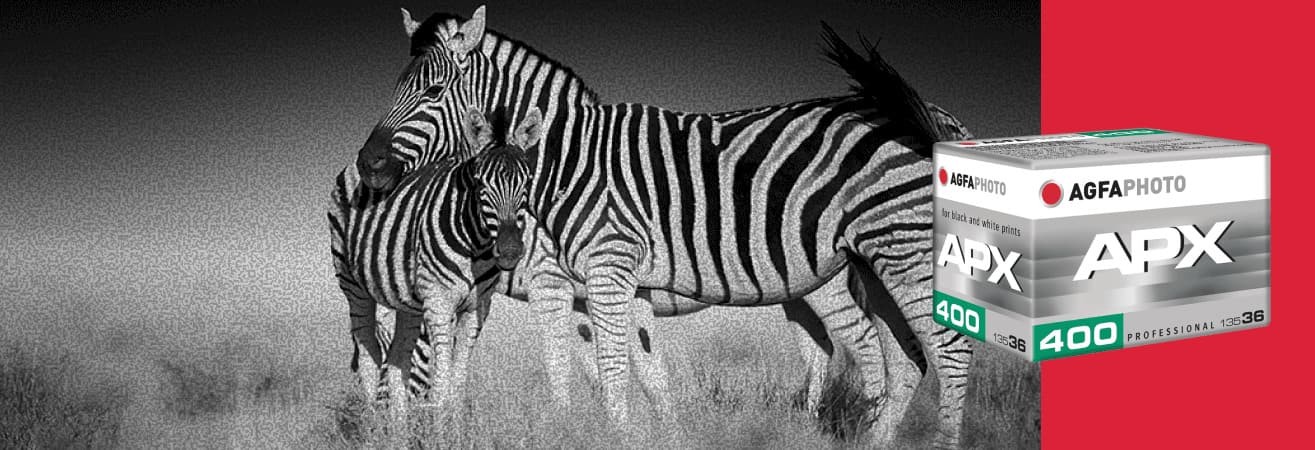
For beginners shooting outdoors, AgfaPhoto APX100 Film (36 exposures) 35mm is an excellent choice. It offers sharp, detailed results, perfect for bright landscapes or scenes in daylight. Its affordable price makes it a very popular film among black and white enthusiasts.
So, to sum up, when choosing a film, the difference in sensitivity may seem subtle. However, it has a significant impact on the final result.
Here is a simple summary:
ISO 100: for very bright environments (outdoors, full sunlight)
ISO 200: for slightly more nuanced conditions (partial shade, late afternoon)
ISO 400: for darker situations (indoors, overcast skies)
The higher the ISO, the more grain will be present. This gives a more raw effect, often appreciated in street photography or to create a vintage feel.
To give you another example, if you want to take portraits in natural light, AgfaPhoto Colour 400 135mm 24-exposure film is a very good compromise. It allows you to shoot handheld without blur, even when the light is low. It offers a nice grain and beautiful warm colours. It is good value for money for discovering colour.
What types of film are there?
There are several types of film, each with its own characteristics.
The most common is colour negative film. This is the type found in most photo labs. It is easy to develop, and you get classic paper prints.
Black and white film appeals to those who love contrast and timeless aesthetics. It sometimes requires special development, but allows for more precise control over the final result.
There is also reversible film, known as slides. The image is positive from the moment it is developed and offers very accurate colours. However, it is more sensitive to exposure and requires greater precision.
In terms of format, 35mm film is the most common. It is compatible with most film cameras. There are also medium format (120) and APS films, which are less common and reserved for more specific uses.
If you are just starting out, GT24FILM 35mm Colour Film (24 exposures) is ideal. It's a great way to get started, while enjoying beautiful, balanced colours. It's easy to find and very reasonably priced.
Choosing and handling your film: instructions for use
Now you know what film is. The next step is to choose the right film for your needs, handle it with care and store it in the right conditions.
Every step counts. And the more you understand the technical implications, the more you will master the craft.
Which film should you choose for analogue photography?
The choice of photographic film depends above all on the available light, the type of photo you want to take and the look you like. A very sunny scene, an indoor setting or an intimate portrait do not require the same characteristics.
You also need to ask yourself whether you prefer to work in black and white or colour. Black and white accentuates contrasts and gives a more graphic feel. Colour, on the other hand, conveys more emotion in certain cases, particularly for landscapes or scenes of everyday life.
Why put film in the fridge?
You may have seen photographers storing their film in the refrigerator. This is no coincidence. Cold temperatures slow down internal chemical reactions. This helps preserve the film's sensitivity and colour stability, especially if you do not plan to use the film right away.
The ideal temperature is around 4 to 8°C. If you are storing several rolls, you can place them in an airtight box to protect them from moisture. Before using them, it is important to take them out of the refrigerator a few hours in advance so that they return to room temperature. This prevents condensation, which could damage the sensitive layer.
However, you should never put them in the freezer, and you should certainly not expose them to sudden changes in temperature. The idea is to keep them in a stable, cool environment, not an extreme one.
What is the shelf life of film?
Like all chemicals, film has a shelf life. This is usually indicated on the packaging in the form of an expiry date. After this date, the film does not become unusable, but its behaviour changes.
Colours may fade, contrast may decrease and grain may become more pronounced. Some photographers appreciate these effects for their random or vintage look. Others prefer to avoid surprises. In any case, it is best to use film within 2 to 3 years of manufacture, especially if it is stored at room temperature.
To extend its life, store it in a dry place, away from light and high temperatures. A simple drawer, or better still, an airtight container in the refrigerator, is sufficient to preserve it well.
Tutorial: how to load and use film
You've chosen your film, now it's time to load it. This is often where beginners go wrong. One quick movement too many, one step forgotten... and the film will not be exposed correctly. To avoid the most common mistakes, follow these step-by-step instructions. They will help you handle your camera with more confidence.
How to load film correctly
Start by opening the back of your camera. Most models have a small lever or release button on the side. Once open, insert your film into the slot on the left. Gently pull the tab to the other side, then engage it in the take-up spool.
Make sure the holes in the film are aligned with the teeth of the mechanism. Turn the advance wheel to slightly tension the film. Then close the back of the camera. Advance the empty film once or twice until the counter reads ‘1’.
A good way to learn these steps at your own pace is to use a simple camera, such as the Reusable Black Film Camera Kit + 2 35 mm Films. It contains a ready-to-use film camera and two colour films, so you can practise without any pressure. This very affordable kit is a great introduction for those who are curious.
How can I tell if my film is loaded correctly?
Still unsure after loading? That's normal, especially at first. Fortunately, there are a few simple ways to check if the film is advancing correctly.
Look at the rewind lever (often located on the top of the camera). If the film is properly engaged, it should turn slightly when you wind the film. The frame counter, located right next to it, should also advance with each shot.
If you don't feel any tension in the mechanism, or if the counter remains stuck, the film is probably not properly engaged. In this case, carefully open the camera (away from light), reinsert the film and start loading again.
A little tip: use the first 2 or 3 frames as test shots. This allows you to check that everything is working properly while taking photos without any pressure.
Why shoot with film?
Today, film photography is attracting more and more photographers, both beginners and experienced. This is no coincidence. This type of photography imposes a different rhythm. Every shot counts. You have to think about your framing, pay attention to the light, and choose the right moment.
This constraint becomes a strength. It allows you to slow down and rediscover a form of attention that is sometimes lost with digital photography. It also encourages you to accept imperfection and enjoy the little surprises that come with developing film.
The result is also unique. The natural grain and the colours, which are sometimes softer or, on the contrary, very intense, give the images real personality. This is what drives many street photographers to return to film.
This is the case for one user who is passionate about scenes from everyday life. He has rediscovered the pleasure of composing without a screen, simply by observing. His choice: AfgaPhoto Film APX100, a very faithful black and white film. It offers balanced contrast and excellent sharpness.
Getting started with film photography
Taking up film photography opens up a whole new world. It also means accepting a slightly different technical approach.
By learning what film actually is, choosing the right type for the light conditions and mastering the right techniques, you'll be off to a solid start. You'll gain confidence with every photo you take.
With reliable film, a simple camera and a little curiosity, you'll be able to capture sincere, often surprising, sometimes imperfect images... but always full of character. And that's the spirit of film photography.