



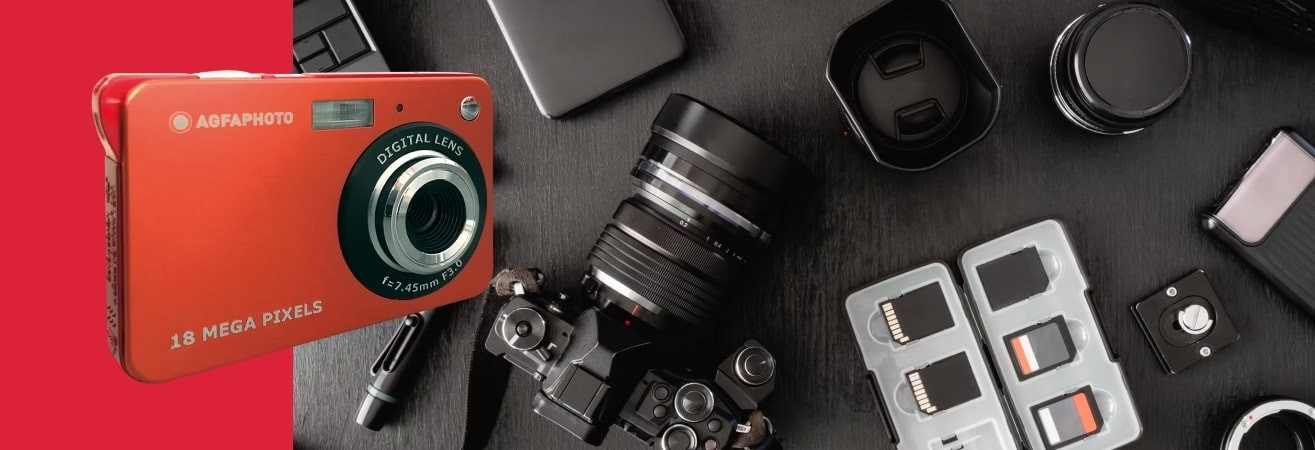
What photography accessories are useful for beginners ?
When you're starting out in photography, the first thing you think about is the camera. That's normal. But it's not the only thing to consider. To develop good habits, progress quickly and get the most out of your first shots, certain accessories can make all the difference.
There's no need to kit yourself out like a professional right from the start. The idea is to choose what will really be useful to you. To carry your camera, protect it, hold it properly, or simply make sure you don't run out of battery power when you're about to take an important photo.
In this article, you'll discover the essential accessories you need to get started without getting overwhelmed. Practical advice, simple use cases, and a few suggestions for equipment will guide you step by step as you take your first steps in photography.
What equipment do you need to get started in photography?
When you start out in photography, you can quickly feel overwhelmed by the amount of accessories on offer. Should you buy everything at once? Is some equipment only for professionals? In reality, to get off to a good start, it's best to get straight to the point. A suitable camera, a few well-chosen accessories and a little practice are more than enough to get you started in the right conditions.
How do you get started in photography?
Learning photography doesn't necessarily require a big investment. What matters is wanting to practise and taking the time to understand how your camera works. Whether you've been given a compact, a bridge or a small hybrid camera, the most important thing is to get to know it well and feel comfortable with it.
Let's take a simple example. You're going away for the weekend or on holiday with your newly acquired camera. You slip it into your rucksack, take it out often, put it on a table... Very quickly, you realise that it can get damaged or knocked about. That's when a protective case becomes essential.
A protective case like the one offered by AgfaPhoto allows you to carry your camera safely, even without a specialised bag. It protects against scratches, minor impacts and dust. It's one of the first simple steps you can take to keep your equipment in good condition.
What are the essential photography accessories?
As soon as you start taking your camera out with you, you quickly realise that certain accessories are very useful. They are not necessarily expensive, but they can save you a lot of frustration. Here are a few of the most important ones.
A spare battery, so you don't run out of power in the middle of the day. Many beginners learn this the hard way. The main battery runs out faster than you might think, especially when you take a lot of photos or use the screen.
A sufficiently large memory card is just as essential. It's better to have plenty of space to store your photos, especially if you like to try out different settings or take bursts of shots.
If your camera runs on batteries, remember to always have a spare pair with you. Choose rechargeable models, which are more economical and environmentally friendly in the long run.
Finally, a wrist strap or shoulder strap will allow you to carry your camera safely, especially if you like to take photos while walking or exploring.
To store your first photos, an SD or micro SD memory card is essential. It saves you from having to transfer your images too often and allows you to keep your mind free during your outings. Choose a sufficient capacity (at least 16 or 32 GB) so that you can experiment without constraints.
How much should you budget to get started in photography?
Getting started in photography doesn't necessarily mean emptying your wallet. It's entirely possible to get properly equipped on a reasonable budget. The key is to identify your needs and not buy equipment that is too complex or unnecessarily expensive when you're just starting out.
An entry-level camera, whether compact or bridge, is more than enough to learn the basics, try out different types of shots and do your first edits. You'll also need a few useful accessories to complete the set, such as a memory card, protective case and backup power supply.
Depending on the model you choose, some cameras still run on batteries, which requires a small recurring budget. It's therefore important to think about this from the outset.
AgfaPhoto cells are particularly well suited to reusable film cameras that do not use rechargeable batteries. It's not a major expense, but it's something to anticipate to avoid unpleasant surprises during your outings.
Photo accessories that really make a difference for beginners
Once you have your camera in hand, you will quickly discover that certain small accessories can really enhance the experience. They are not always included in the basic packages, but they quickly become indispensable. This is especially true when you leave home, take a series of photos or want to improve your skills.
Here are three simple but effective accessories that make everyday life easier and save you a lot of frustration, especially in the first few weeks.
Why have a spare battery from the start?
When you're starting out, you often want to take lots of photos. You test the settings, explore the different modes, take bursts of photos, look at your shots on the screen... All of this consumes energy. A single battery can quickly reach its limits, especially if you spend the day outdoors or go away for the weekend without easy access to a power socket.
That's why a spare battery quickly becomes an essential accessory. It allows you to continue taking photos without stress, without having to check the remaining battery percentage every ten minutes.
A spare battery is designed to fit different camera models. It's a real convenience for long outings, hikes, or days of sightseeing when you want to capture everything without constraints.
How can you protect your camera when travelling?
When you're just starting out, you don't yet have all the skills down pat. You might put your camera down on a table without thinking, slip it into an unpadded bag, or forget to put the lens cap back on... These are reflexes that come with time, but they can damage your camera from the very first time you use it.
To protect your equipment, a few simple accessories can make all the difference. A wrist strap prevents accidental drops, a cover protects against shocks and dust, and a suitable cloth allows you to keep the lens clean without scratching it.
A dedicated cleaning cloth, often made of microfibre, allows you to gently wipe the lens. It is very useful for removing fingerprints or small dust particles before taking a photo. This small gesture can prevent many unwanted blurred images right from the start.
Do you need a tripod when you start out in photography?
A tripod may not be the first accessory that comes to mind, but it can quickly become a valuable ally. It stabilises the camera for sharp photos in low light and allows you to experiment with long exposures. Or simply frame a scene without having to hold the camera the whole time.
It's particularly useful for posed portraits, landscapes or night scenes. What's more, using a tripod helps you slow down and think about your composition. This is very helpful for beginners.
If you're just starting out, a small tabletop tripod or a lightweight model is more than enough. There are compact, easy-to-carry tripods that fit all types of cameras. It's a good way to progress at your own pace without a significant investment.
Manage and secure your photos from the very first shots
When you start out in photography, you often focus on taking the shot. But don't neglect what happens afterwards. Backing up your photos, organising them properly and avoiding losing them are good habits to adopt from the outset. This allows you to keep your memories intact, avoid unpleasant surprises and progress with greater peace of mind.
How can you store your photos safely when you're just starting out?
It's tempting to leave everything on your memory card, especially when you're just starting out. However, a minor technical issue, mishandling, or a device malfunction can be enough to erase dozens of photos. It is therefore important to adopt a simple routine for backing up your images.
Ideally, you should regularly transfer your photos to another medium, such as a computer or USB stick. You can then organise them by theme, date, or event, which makes navigation and archiving easier.
An AgfaPhoto USB stick makes it easy to transfer your photos without the need for an internet connection. It is also very handy for sharing your images with friends and family, or for keeping a backup copy away from your device.
Should you empty your memory card after every photo outing?
It's not a requirement, but it's a good habit to get into. After your photo outings, emptying your memory card helps avoid unpleasant surprises. You free up space, avoid card saturation and reduce the risk of data loss. It also allows you to sort through your photos with a clear head.
If you are going away for several days or taking a lot of photos, it may be useful to have a second memory card available. This allows you to continue shooting without worrying about the remaining space.
A reliable SD memory card with good capacity, such as those mentioned above, is an essential accessory to have in duplicate as soon as you start taking more photos.
How can you avoid losing your first photos?
When you're just starting out, you don't always think about backing up your photos. However, losing your first images can be discouraging. They are often the ones you enjoy looking back on the most, and they allow you to measure your progress over time.
To limit the risks, it's best to back up your photos on at least two media. A USB stick and a hard drive, or a USB stick and online storage. This ensures that you always have a copy somewhere, even in the event of a breakdown or accident.
Organising your files from the outset (with clear names, dates, or locations) also makes it easier to find your way around. It's a small effort that helps you get into good habits from the very first weeks.
Get the right equipment to start photography with peace of mind
Getting started in photography is above all about a desire to explore, experiment and capture what surrounds us. Having the right camera is important. But the right accessories, chosen with care, allow you to go further, faster and with greater comfort.
A spare battery, a memory card, a cover or a simple wrist strap... These are small details that make all the difference. They make the practice smoother and more enjoyable, and help you avoid some common mistakes when you're just starting out.
There's no need to buy everything at once. The key is to understand what you need, based on your usage, pace and desires. By taking the time to get the right equipment, you'll gain autonomy and confidence to progress at your own pace.